Dielectric powder coating
Expertise in high-voltage protection for EV battery systems.
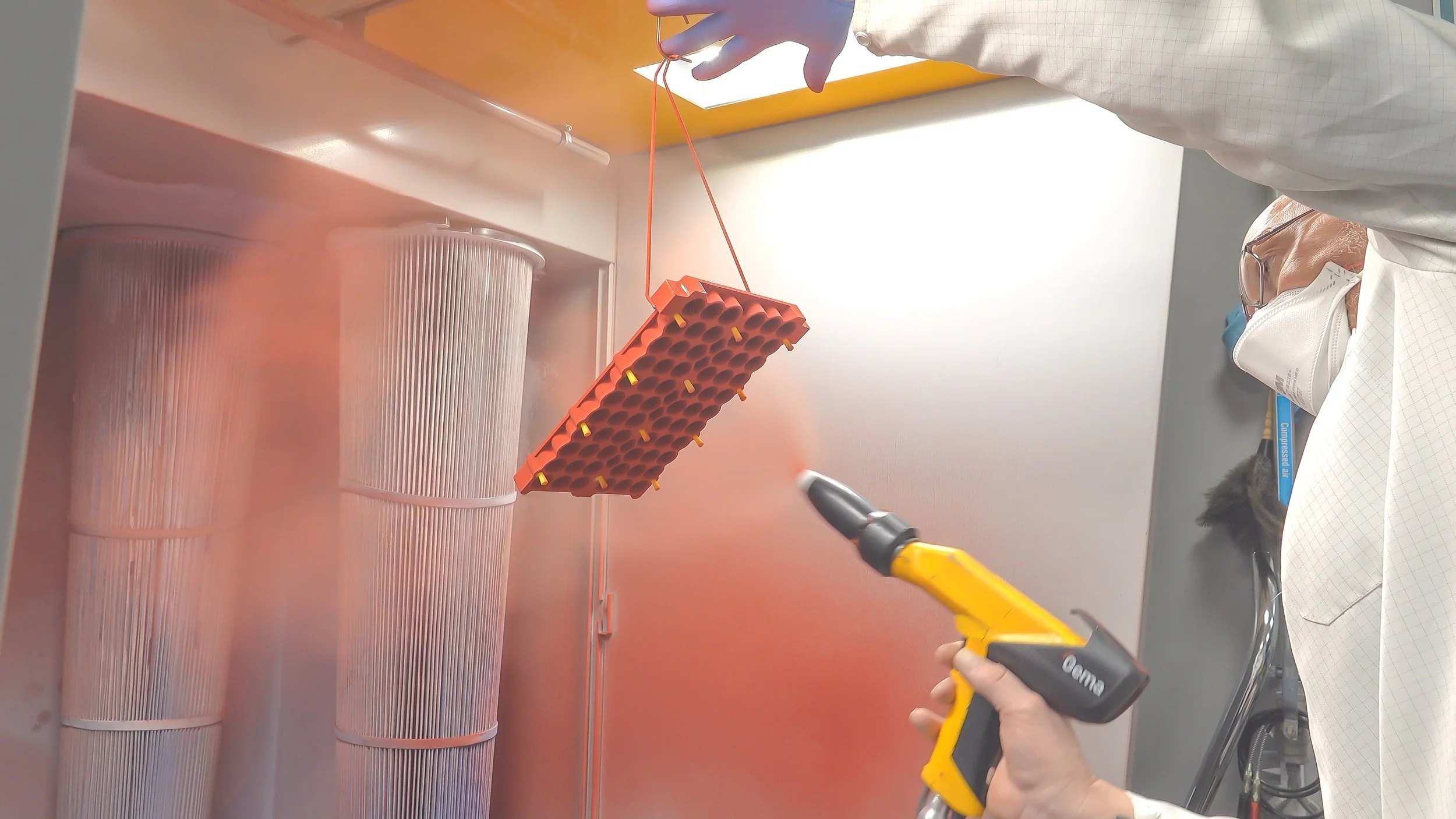
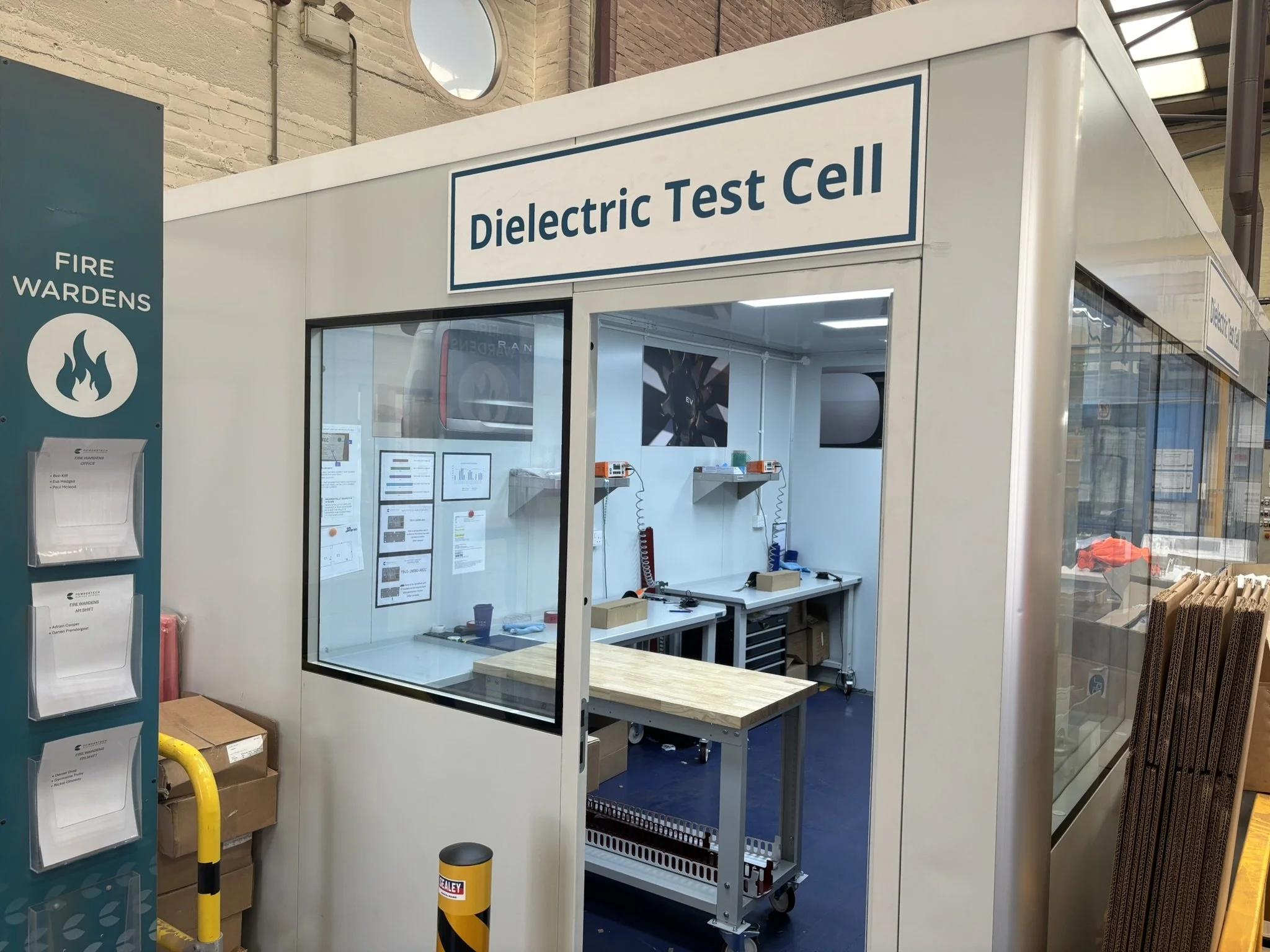
Dielectric powder coating for aluminium in electric vehicles.
Dielectric powder coatings, such as Resicoat (AkzoNobel), create an insulating barrier against electrical currents on metal surfaces, preventing electrical conduction and protecting against short circuits, electrical arcing, thermal runaway, and environmental degradation. They are composed of highly specialised non-conductive particles within the powder coating formula.
The evolution of dielectric coatings: From busbars to aluminium battery enclosures
Resicoat® is AkzoNobel’s renowned dielectric powder coating brand, originally developed for electrical insulation applications and now a critical component in electric vehicle (EV) systems. It is used by OEMs and specialist powder coating companies like ours to protect EV batteries, busbars, motors, and cooling systems. With high dielectric strength, UL certification, and chemical resistance, Resicoat is the trusted choice for safety, efficiency, and durability.
Dielectric coating is a long-established and proven technology, used primarily for insulating busbars - key electrical conductors in power distribution systems. Adapting this technology for insulating thin aluminium sections in EV applications has presented a unique set of challenges. It requires a complete engineering of the coating process to meet the distinct mechanical and electrical demands of EV battery enclosures.
With over 40 years of expertise in surface science, we are experienced in adapting techniques for new purposes. We have identified the risk factors in applying dielectric powders effectively and have refined our powder coating techniques for dielectric powders used in EV battery assemblies, overcoming the challenges presented by the demands of this new application.
We have developed a dielectric coating process for aluminium that provides optimal insulation performance and durability, and ensures compatibility with the stringent requirements of the next-generation EV applications.
Practical experience and technical expertise, used in collaboration with you.
We have been fortunate enough to hone our expertise through working with major OEMs and Tier 1 companies in the EV sector.
This has provided the opportunity to discover many challenges arising in the application of dielectric coatings and to find the best solutions.
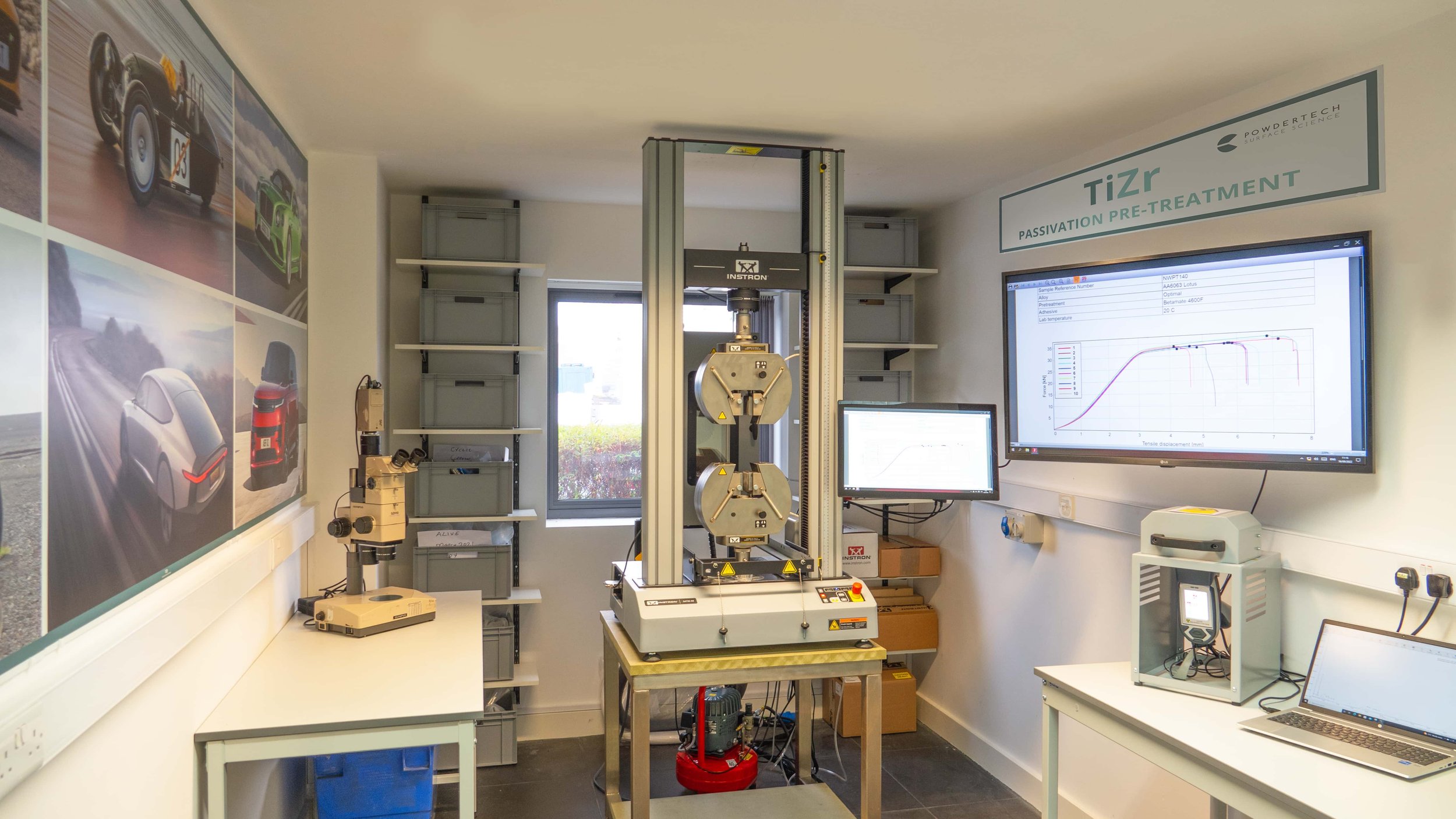
Our in-house testing facilities are fundamental to perfecting our processes, and we have invested in the best equipment for the job. We have PhD-level expertise on our team and regularly collaborate on international research projects. Testing and development is an essential part of our service offering.

To ensure the success of your dielectric powder coating project.
Proficiency in applying dielectric coatings
This is a quick overview of what is required – and expertly delivered by our team at Powdertech Surface Science.
The coating:-
High dielectric strength >30kV/mm
Flammability test UL-94 V-0
Suitable for use in-cell, in-pack, with good chemical and corrosion resistance to protect the battery cooling system. The coating can be thermally conductive, like in cooling plates of EV batteries.
The application:-
Applied at the required coating thickness to meet the specifications required for electrical isolation.
The coating must be free from any flaws. Any failure in the integrity of the coating would result in unsafe leakage of current.
Expertise in masking to apply the insulating coating only where required. Dielectric coatings are designed to prevent arcing within the battery enclosure and, therefore, must be applied in precise areas to electrically isolate certain parts of the metal. Our years of experience in CAD design and the application of masking schemes are essential for the efficacy of the coating.
Automated application process to deliver a consistent performance level.
Electrical insulation, isolation and temperature regulation is required within battery cells. Fluctuating temperatures can cause the battery cell temperature to rise incredibly fast, known as a thermal runaway, and this brings the risk of battery failure, as does electrical arcing. We use dielectric coatings similar to Resicoat in order to meet certain client specifications and we also use Resicoat itself. These coatings provide exceptional resistance to thermal shocks and have high dielectric strength.
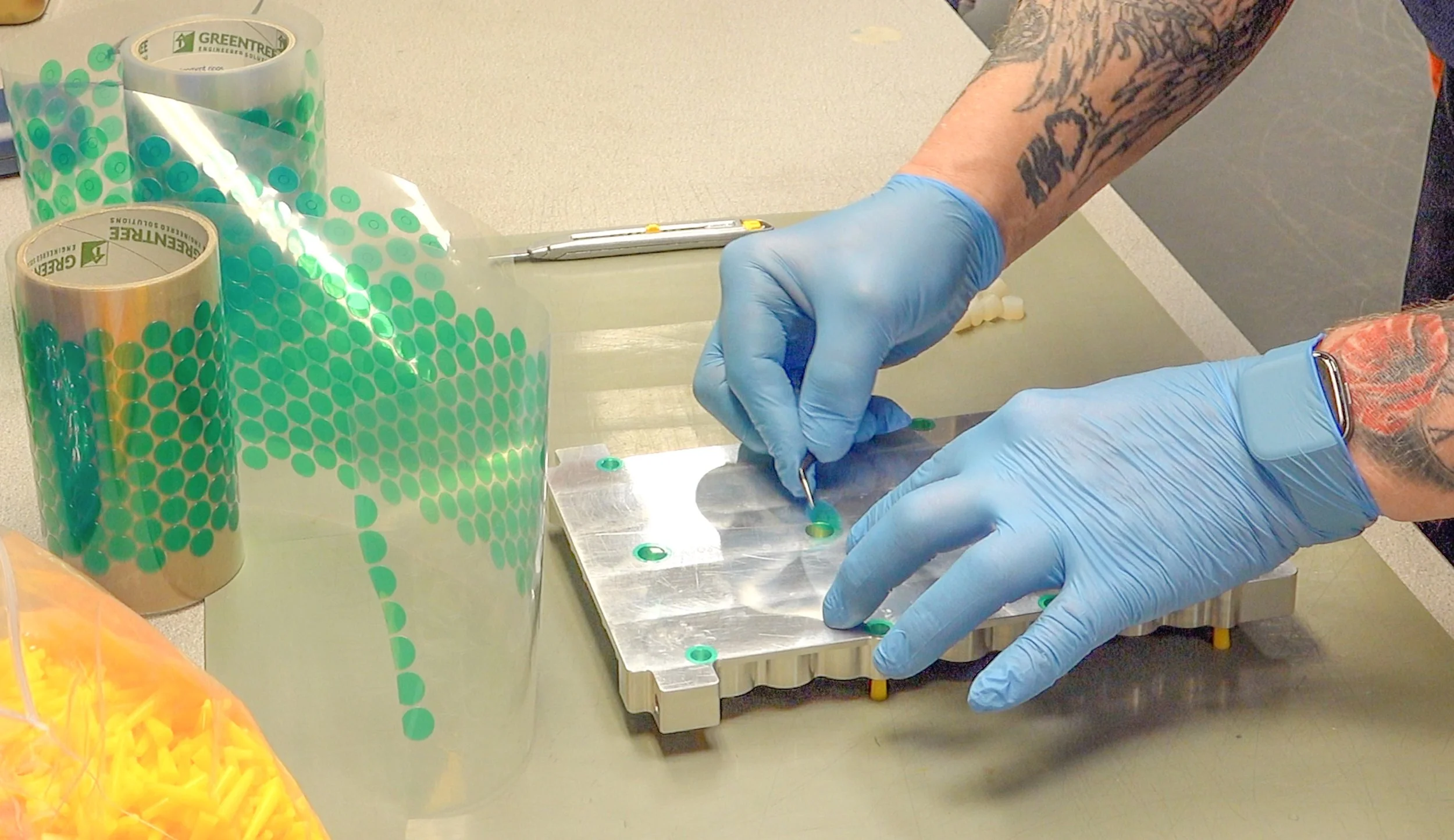
At Powdertech, we don’t just apply coatings - we engineer solutions. Our expertise in dielectric science, precision application, and supply chain integration makes us the go-to partner for EV battery and component manufacturers.
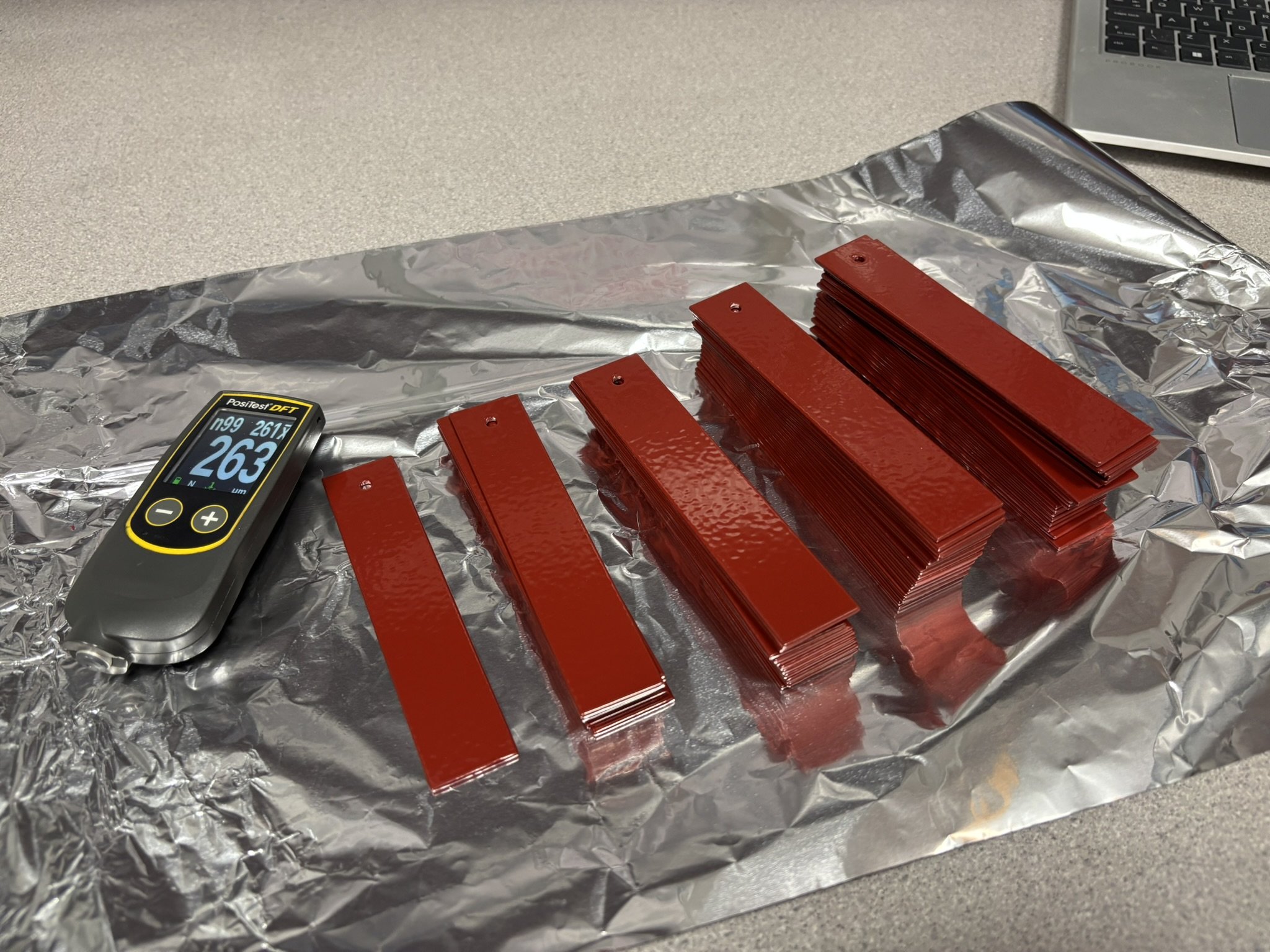
Pre-treatment for dielectric powder coating
It is important to remember that a dielectric coating is also a protective coating for the metal and must perform other functions in addition to insulation and temperature regulation. It must be sufficiently robust for the rigours of a car manufacturing plant and subsequent vehicle usage. The coating must have excellent adhesion, ensuring chemical and corrosion resistance.
The first step in achieving a high-performance dielectric coating is to ensure the cleanliness and effective pre-treatment of the aluminium surface. This forms the foundation for a reliable dielectric coating for maximum performance and longevity.
Our TiZr passivation process is designed to meet the demanding requirements of EV battery enclosures, ensuring long-lasting protection. Without it, adhesion failures, coating inconsistencies, and long-term degradation can occur. Contaminants, oxides, and surface oils must be completely removed to prevent adhesion issues.
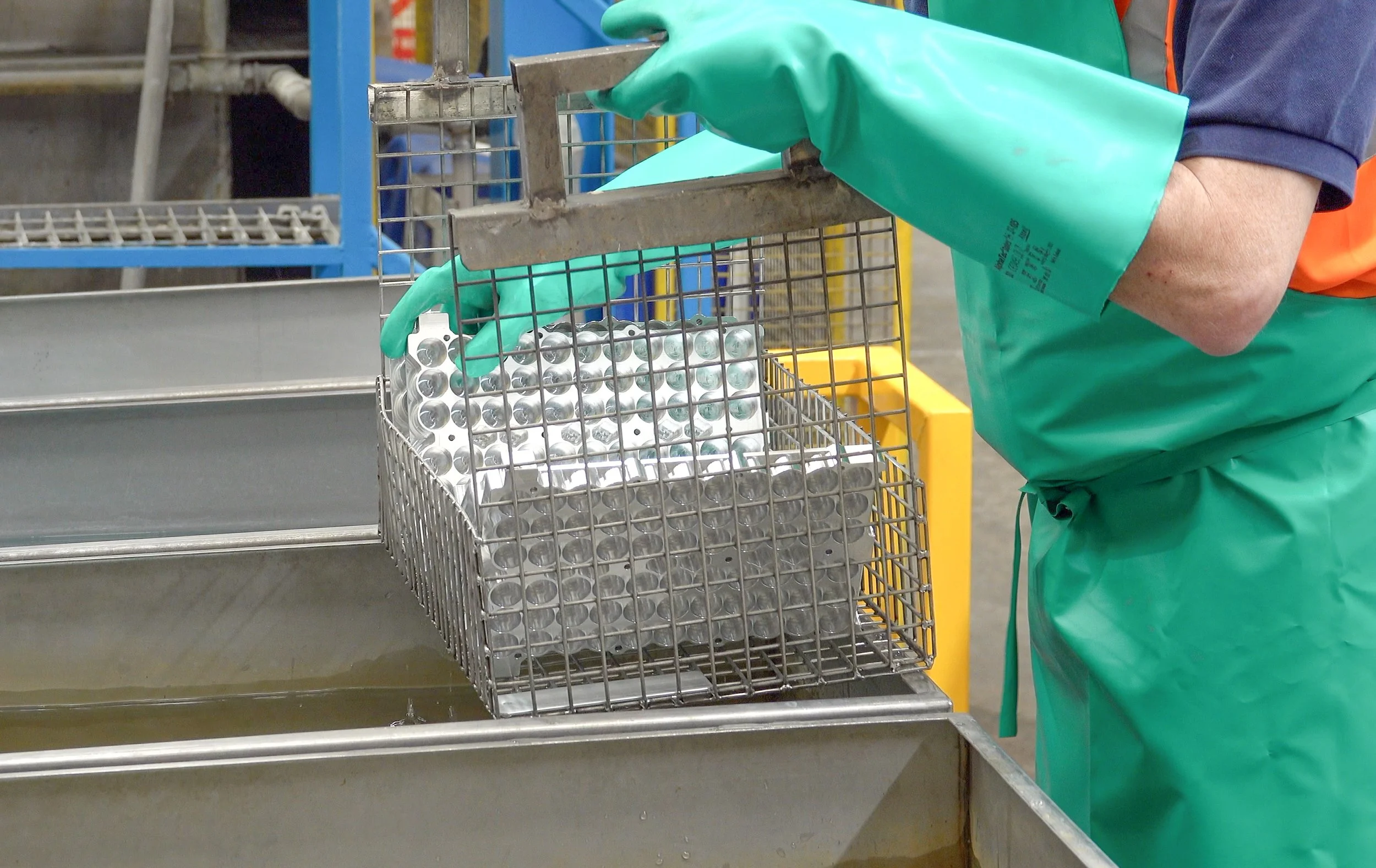
Testing Aluminium surface before and after TiZr Passivation.
Addressing dielectric coating challenges with innovation and expertise
Powdertech’s ability to detect any problematic issues early in the process and find solutions, often innovative ones, is due to our team of dedicated technical experts working with advanced on-site testing capabilities and ongoing quality measures. What follows is a list of the main issues that need to be addressed for every application.
Coating thickness - optimised for both insulation and fit tolerances
The dielectric coating in EV battery assemblies needs to be of sufficient thickness to meet the dielectric properties required. This is specified by the customer. However, if the coating is too thick, then the number of battery cells that can be introduced is reduced. This can affect vehicle range and performance.
At Powdertech, our team fine-tunes the coating thickness to meet the required coating specifications and strike the perfect balance between insulation and space optimization.
The result? A high-performance, space-efficient dielectric coating that meets the specification without compromising on protection.
Edge coverage
One of the major challenges in dielectric coating is to ensure even coating coverage, especially on the edges where thinning can easily occur. This will reduce the insulation and lead to potential electrical failures.
Manufacture of the part needs to avoid sharp and sheared edges as these are far more prone to coating failures compared to round and smooth edges. We work closely with customers to advise on part design. It is important to get in touch with us at the start of a project so that the entire process is correct from the outset and the end product can perform flawlessly.
Porosity control and other potential flaws
We take all measures to avoid porosity in the dielectric coating. These measures start with thorough cleaning and passivation to avoid outgassing and poor adhesion.
Porosity, if it occurs, leads to microscopic voids, pinholes, or air pockets within the coating layer. In these areas the coating will be too thin, forming a weak point in the insulation. We use Holiday testing to check for any porosity in applied coating. The method uses an electrical current that flows through a low resistance path and triggers an alarm (buzzer) when a flaw is detected.
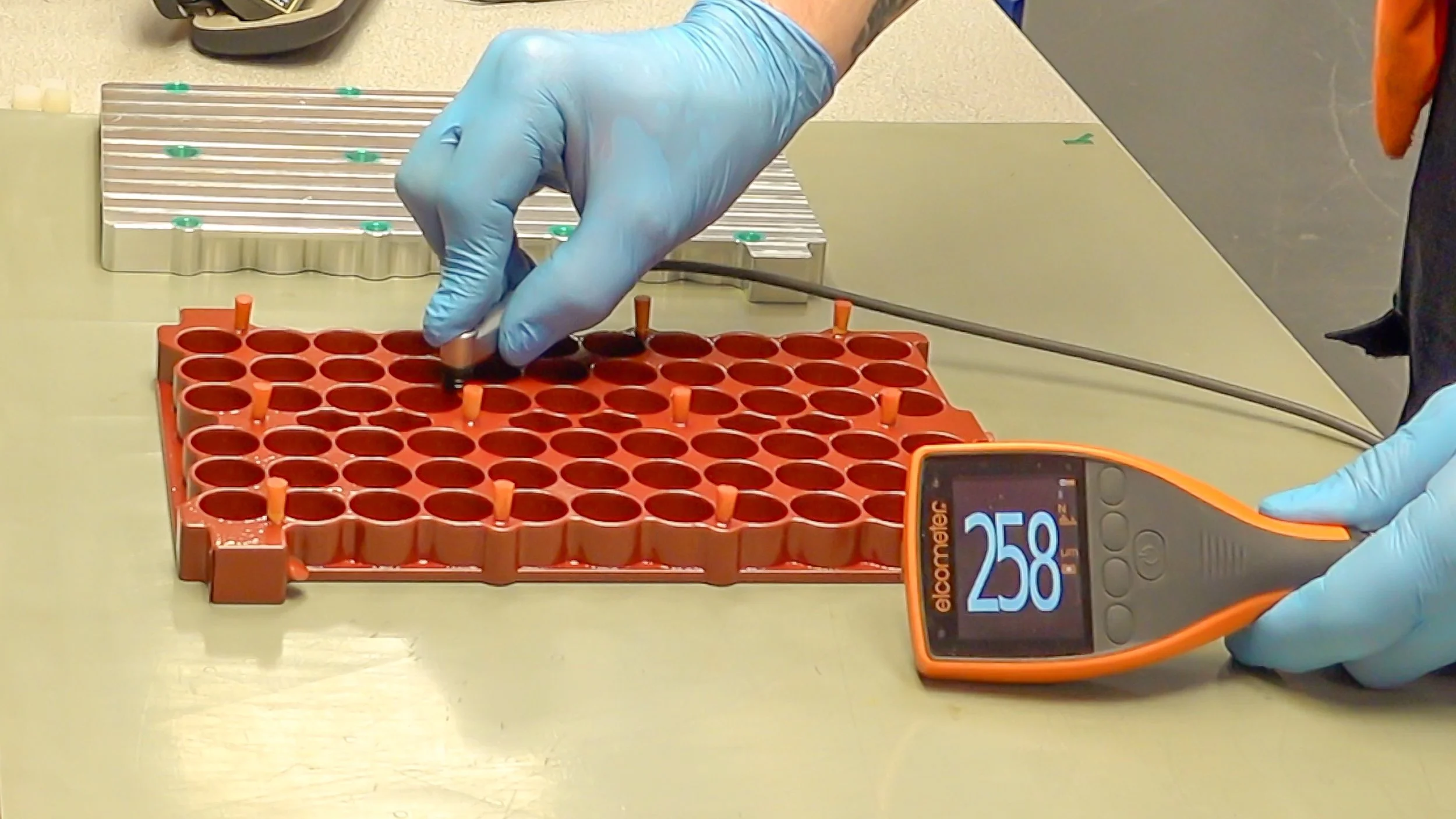


Testing dielectric coatings
Metal cleanliness prior to coating.
Before any coating, we ensure that the metal surface is sufficiently clean to receive our TiZr process by testing the surface for cleanliness. See more on the TiZr passivation page and view our short video ‘How Clean is Clean? ‘ on that page.
Efficacy of dielectric coating
We need to test for a variety of measurements, all of which are critical for an efficient coating that meets a client’s specification.
Breakdown voltage test with HI-pot test
We need to assess at what voltage the coating breaks down and allows current arcing (the amount of current leakage that can pass through the coating without any resistance) to form a conductive path.
For this, we use a Hi-Pot (high-potential testing) meter. A high voltage is applied to the coated surface, and any current leakage is measured. Each manufacturer has their own leakage current limit specified.
The objective is that no current should flow. If it does, the coating has ‘broken down’ at that voltage.
Hi-Pot (high potential testing) is a ‘withstand’ test – it verifies whether the coating can withstand the intended operational voltages – whether it has the required dielectric strength. It also checks the uniformity of insulation across the entire surface.
HI-Pot testing is being conducted for LUMotorsport’s electric Formula racing car’s battery pack.
2. Dielectric coating consistency with Holiday test
We also use Holiday test equipment to ensure that there are no such flaws in the coating – this is called a ‘continuity test’.
An electrical current that flows through a low-resistance path is passed across the coated surface and triggers an alarm (buzzer) when a pinhole, air bubble, crack, or thin spot is detected.
Holiday testing to detect any potential flaws in the uniformity of the surface.
3. Voltage potential testing/Insulation resistance testing – with a megohmmeter
The megohmmeter measures the resistance of an insulator, which is a key indicator of its ability to prevent electrical leakage. A high DC voltage is applied to the component, and the current flow is measured and converted to a resistance reading (typically in megohms). Manufacturers will specify the maximum leakage that can be tolerated.
4. Aging resistance tests
It is important to check the retention of the insulation properties after exposure to environmental stress such as humidity, temperature cycles, corrosive environments, chemical exposure, and more.
Hi-Pot testing is carried out first to verify that the coating provides the correct level of protection. Then the surface is exposed to those conditions listed before being Hi-Pot tested once again.
There are three stages of dielectric coating strength testing :
Hi-pot testing - To check if the coating has the right level of protection.
All the exposure tests - To check the ageing resistance.
Hi-pot testing again - To check if there’s any drop in performance or not.
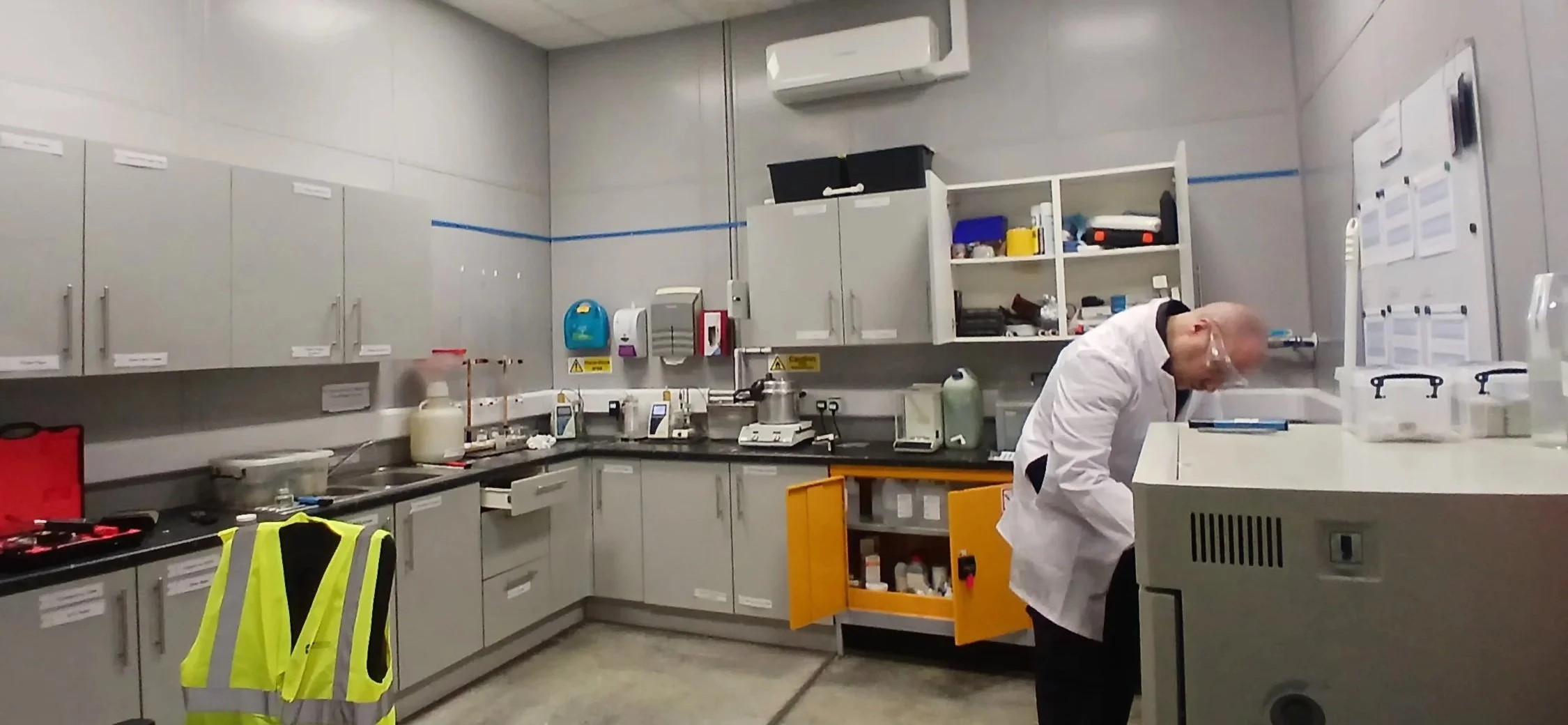
To learn more about HI-Pot testing and Holiday testing, visit -
Dielectric powder coating case study: LUMotorsport’s electric Formula racing car with Powdertech’s advanced dielectric coatings.
Loughborough University Motorsport (LUMotorsport), one of the UK’s premier Formula student teams, partnered with Powdertech Surface Science to achieve durable, high-performance dielectric coatings that could meet the rigorous demands of motorsport, provide electrical insulation, and protect against short circuits, electrical arcing, and overall environmental degradation.
LUMotorsport’s electric Formula racing car with Powdertech’s advanced dielectric coatings.
The complete guide to dielectric coating for EV battery assemblies series.
Dielectric coupon testing is a low-risk testing process for validating dielectric coating on aluminium components. These aluminium test coupons would let us simulate how your dielectric coating will perform under read-world conditions, before coating at scale. Read more…..
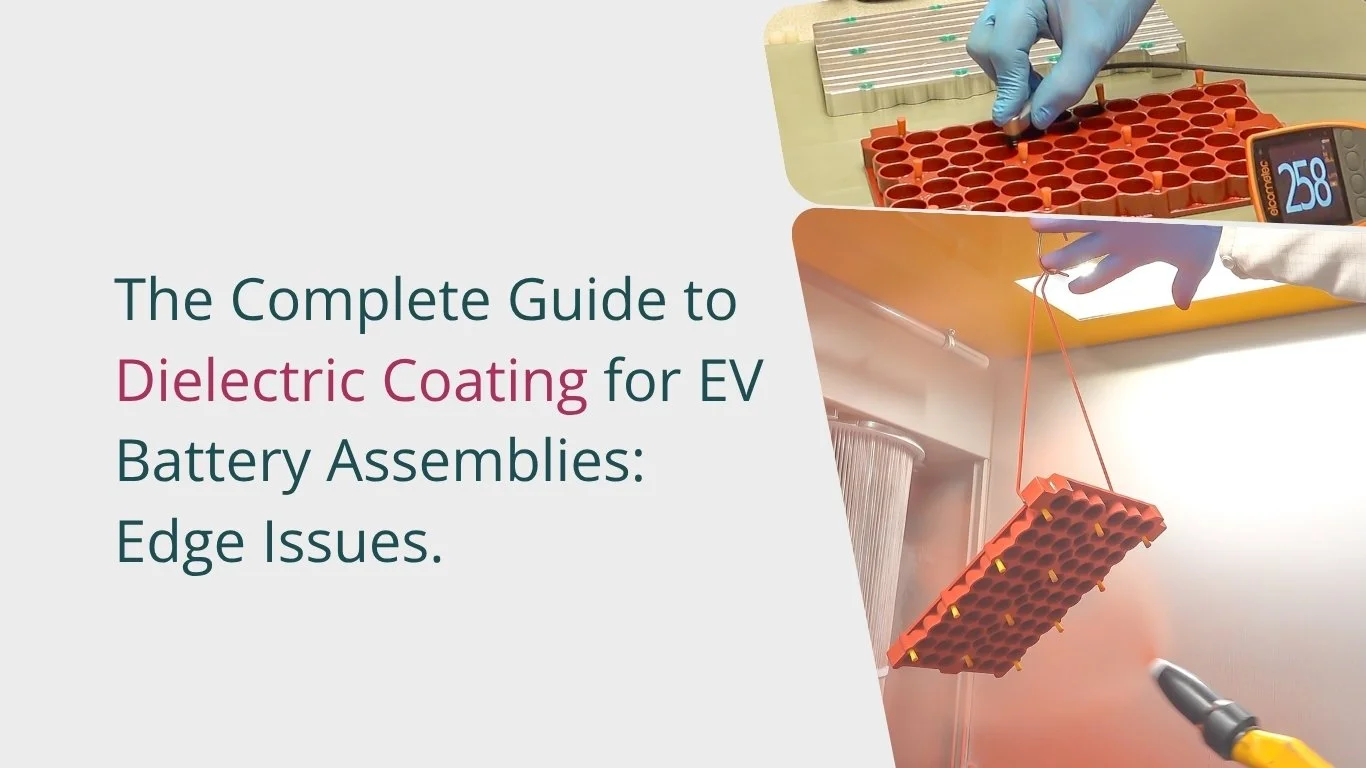
A minor redution in coating thickness at an edge can lower insulation resistance below acceptable thresholds, leading to electrical arcing, or outright machine failure. Read more….
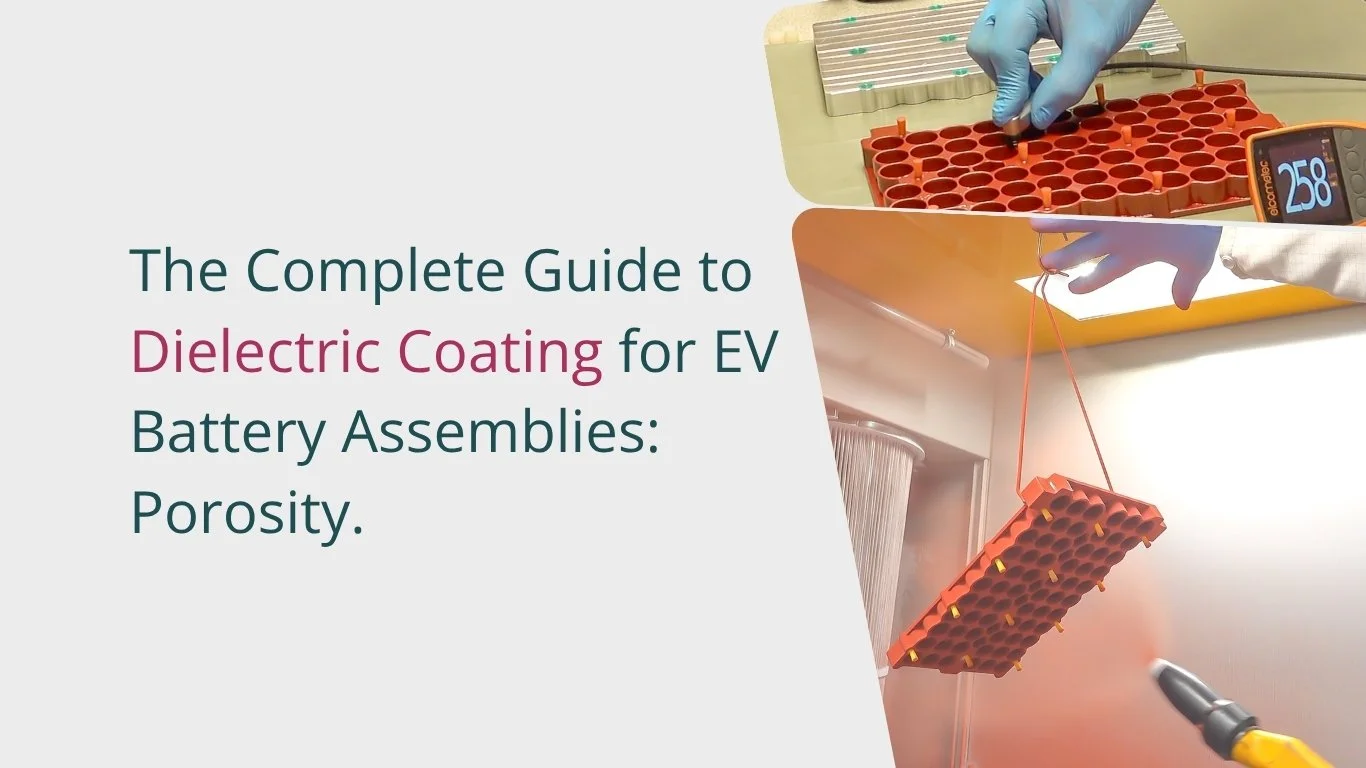
Porosity in dielectric coating refers to microscopic air pockets, bubbles, or voids that can form within the coating layer, affecting the insulation in EV battery assemblies. Read more…..
Frequently Asked Questions
-
Yes. We perform aluminium coupon testing mainly prior to full scale production. These tests allow us to :
Checking the bond strength of the adhesives to the coating.
To check the functionality of the coating during riveting or bolting.
To check the durability of the coating under different environmental conditions, such as humidity cycling, temperature cycling, and mechanical stress
-
Typically 1-2 weeks.
If we have to design bespoke masking, jigs, or powder in order to meet the specification, then the lead time could be 3-4 weeks. approx.
Contact us to discuss your dielectric coating project.
-
Yes, we coat prototypes and prefer to get involved at the prototype stage to offer a robust solution early on.
We very often do one-off coating applications to allow customers to test their concepts.
Aluminium coupon testing is one such validation process that we offer prior to full-scale production.
To know more, read our technical article on aluminium coupon testing.
-
Batch-to-batch consistency is maintained through documented standard operating procedures (SOPs), controlled process parameters, and customer-specific quality requirements.Testing is carried out to agreed specifications and frequencies, ensuring consistent coating performance.
Where possible, we utilise automated application equipment, and our engineering team develops dedicated process programmes for each component to deliver repeatable results across production batches.
-
We can coat from single parts up to batches of thousands.
-
No, not always required.
The right coating approach can make a significant difference to both film build control and part functionality.
But pre-heating may be required if a thicker film build coat is needed, keeping the fit tolerance in check.
If there is good process control system in place, parts can be electrostatically coated at room temperature and the film thickness can be controlled more accurately achieving the desired dielectric performance without compromising the fit tolerance.
In projects where both coating performance and dimensional accuracy matter, process control makes the difference.
-
We use automated equipment for powder application which is tuned to apply the correct amount of coating.
Presenting the component to the spray gun with correct orientation in the correct areas, helps to ensure controlled coating thickness for tight tolerances.
In addition to this, keeping the customer as the central point and gaining a thorough understanding of critical surfaces on the component plays a significant role in assigning control procedures.
-
Yes. We have the capability to do Hi-Pot and Holiday testing on-site at our Bicester facility.
Learn more about our Testing and development.
We can provide the report if asked.
-
We primarily apply epoxy-based dielectric powder coatings, selected to meet the electrical insulation, durability, and performance requirements of each application.
We also offer Resicoat dielectric powder coatings, AkzoNobel's industry-leading range of epoxy-based dielectric coatings for EV battery systems and electrical components.
Depending on your specification, we can recommend and apply the most suitable dielectric coating system for your application.
-
Yes. We regularly coat components with complex geometries and work closely with customers to identify critical areas that require dielectric insulation.
With extensive experience across different coating systems and edge geometries, we can develop robust coating solutions for a wide range of applications with very high degree of accuracy on a 3D CAD system.
Our team provides guidance from the prototype stage onwards, helping to optimise component design and coating performance before production begins to ensure potential pitfalls can be ruled out at the design stage.
More reasons to choose Powdertech metal finishing

We carry out a meticulous final inspection - checking dimensions and visual aspects of the parts.

Direct despatch to OEM’s. We are familiar with EDI systems and online booking of transport, direct to end users.

We offer express turnaround in a matter of hours - we are set up for rapid job completion where necessary.

Dedicated warehouse facilities for raw and finished goods.
To ensure the success of your dielectric powder coating project
Let’s build the future of EV insulation together.
More Metal Finishing Services
-
![]()
INTRICOAT
-
![]()
Dielectric Coating
-
![]()
TiZr Passivation
-
![]()
Powder Coating Aluminium
-
![]()
Iridite NCP
-
![]()
Testing & Development
-
![]()
PowderBond PP
-
![]()
Powder Coating Magnesium