Precision powder coating quality control: INTRICOAT’s testing and inspection process.
Key Takeways
- End-to-end quality control – From PFMEA to final inspection, ensuring consistent aluminium powder coating performance.
- Coating validation – XRF, adhesion, and cleanliness tests ensure durability and surface integrity.
- Controlled, repeatable processes – Daily checks, data logging, and environment monitoring maintain consistency.
- Specialist testing capability – Hardness, impact, and corrosion testing for high-spec applications.
INTRICOAT’s powder coating quality control overview
This article provides insights into structured testing and quality control processes behind INTRICOAT’s precision powder coating process.
Our processes include a detailed overview of internal control systems, batch quality checks, individual part inspections, and advanced testing procedures, all designed to deliver the consistent and precise powder coating performance required in high-value aluminium components.
Pre-production analysis and process validation
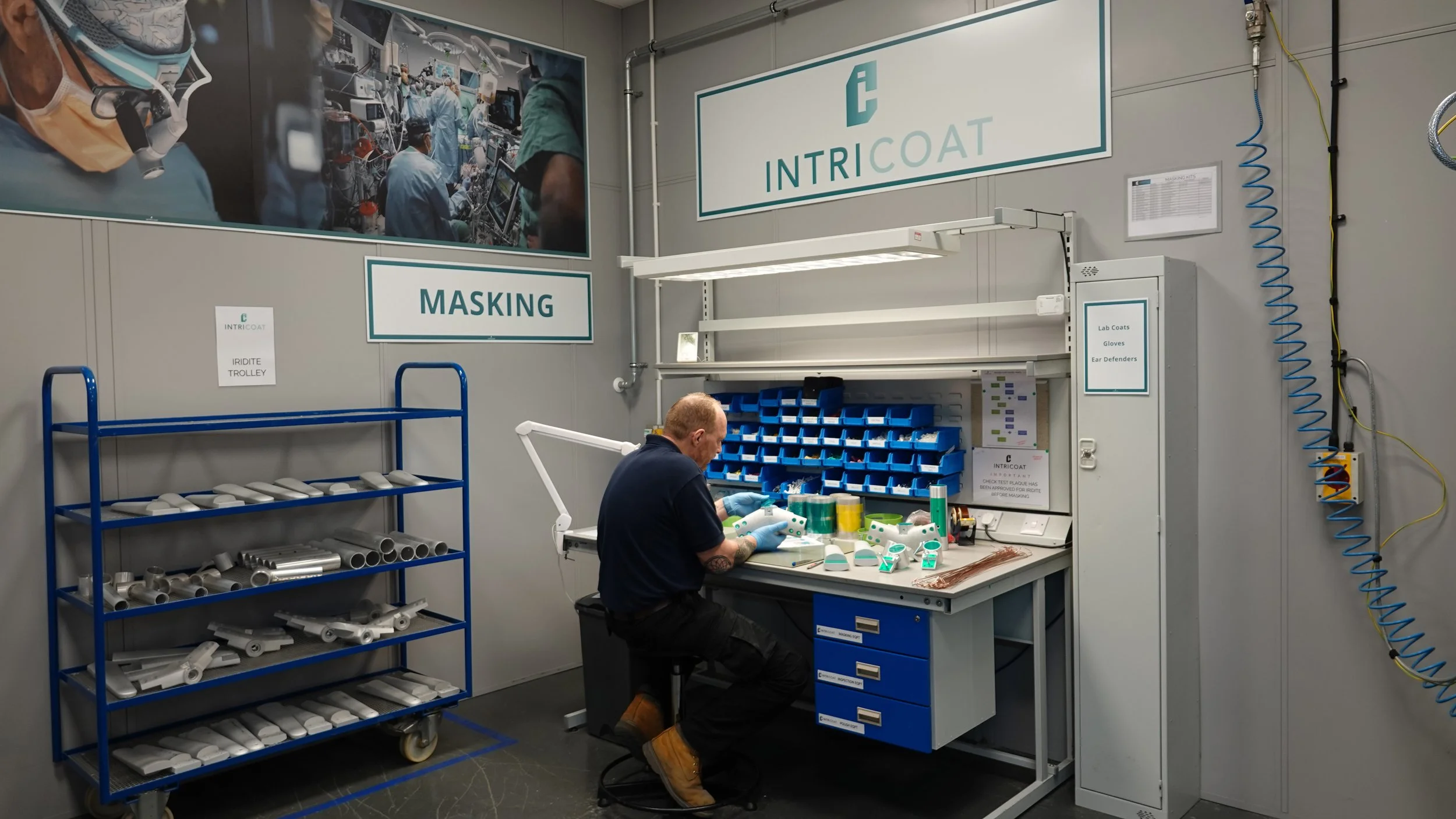
At INTRICOAT, quality checks start before production begins. We use a process called Process Failure Mode and Effects Analysis (PFMEA) to identify potential risks, understand their impact, and put preventive measures in place early on. This helps us keep the coating process consistent, controlled, and aligned with customer requirements.
We also carry out regular checks using test tokens - standard sample panels that are coated alongside actual parts. These allow us to monitor coating performance without affecting customer components.
INTRICOAT’s daily process control and pre-coating system checks

Before any coating begins, a series of daily checks is completed to verify that all process parameters are within specification. These controls form the foundation of stable and repeatable production.
Internal control checks - These routine checks ensure that all production systems, materials, and environmental conditions remain stable before coating begins.
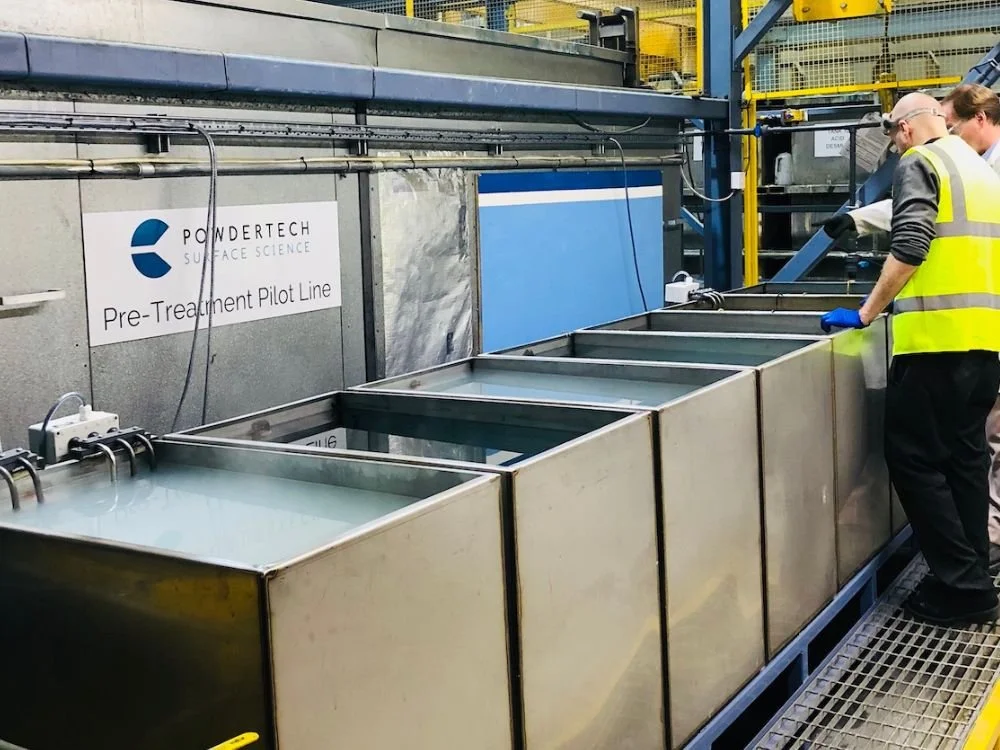
Pretreatment line checks
Daily titration tests of process chemistry of the tanks - A chemical analysis performed daily to monitor the concentration and balance of pretreatment chemicals in process tanks.
Cleanliness & temperature checks before starting the batch process - Verification that all parts, jigs and line conditions meet required cleanliness and temperature parameters before entering the batch process, ensuring consistent coating application and adhesion.
Data logging of the oven - We continuously monitor oven temperature and curing cycles to ensure coatings are properly cured for the best performance and durability.
Powder shelf-life checks - Routine verification of powder coating materials against expiry dates and storage conditions is done to maintain consistent application of coating quality.
An overall environment check -Monitoring of ambient conditions such as temperature, humidity, and contamination levels within the coating environment to ensure stable processing of parts and to prevent defects.
Batch-level quality control and incoming part inspection
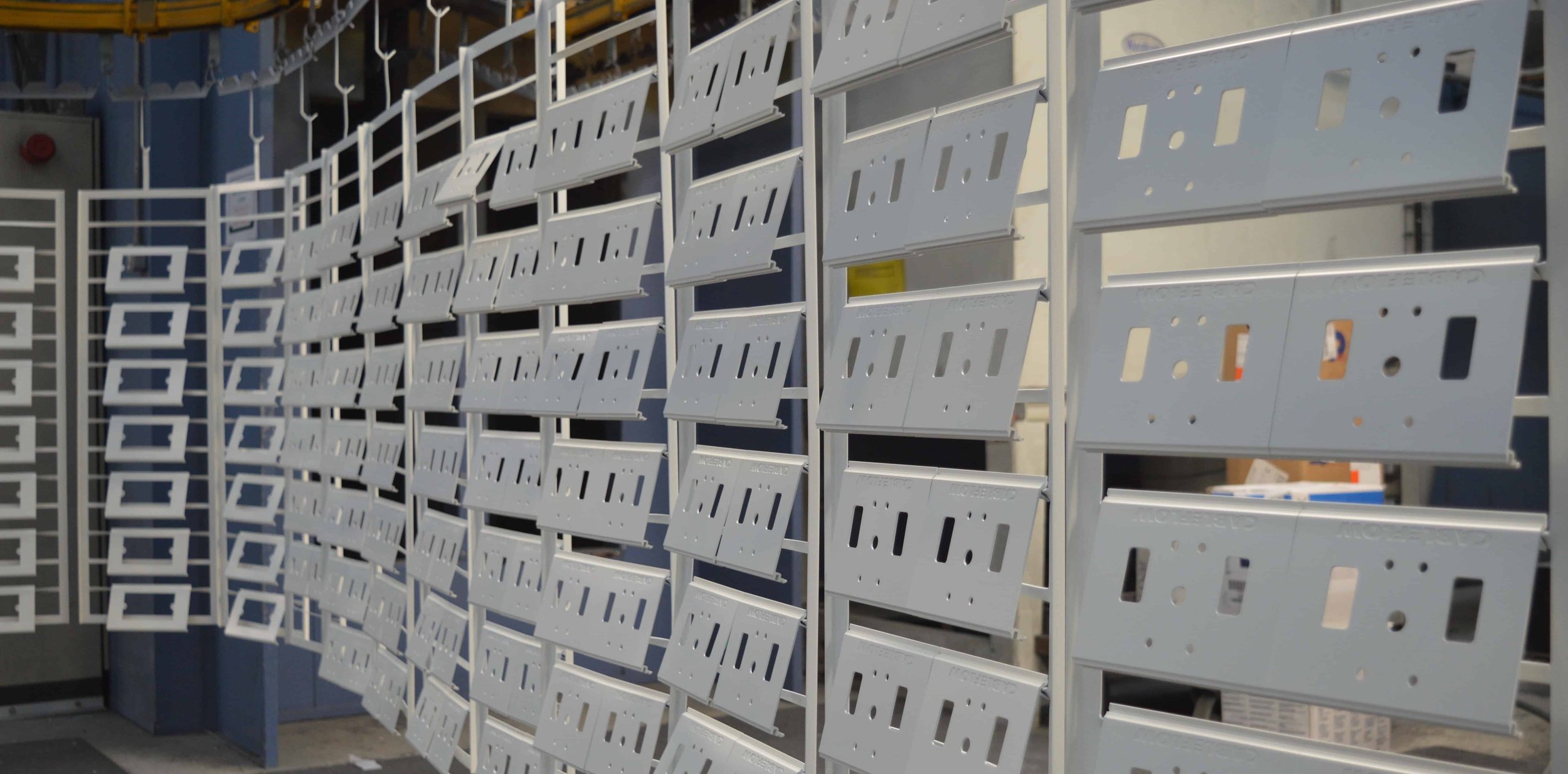
Before each batch of parts enters the pretreatment and coating stages, a series of checks is carried out to confirm that systems are running correctly and that parts are in good condition for coating.
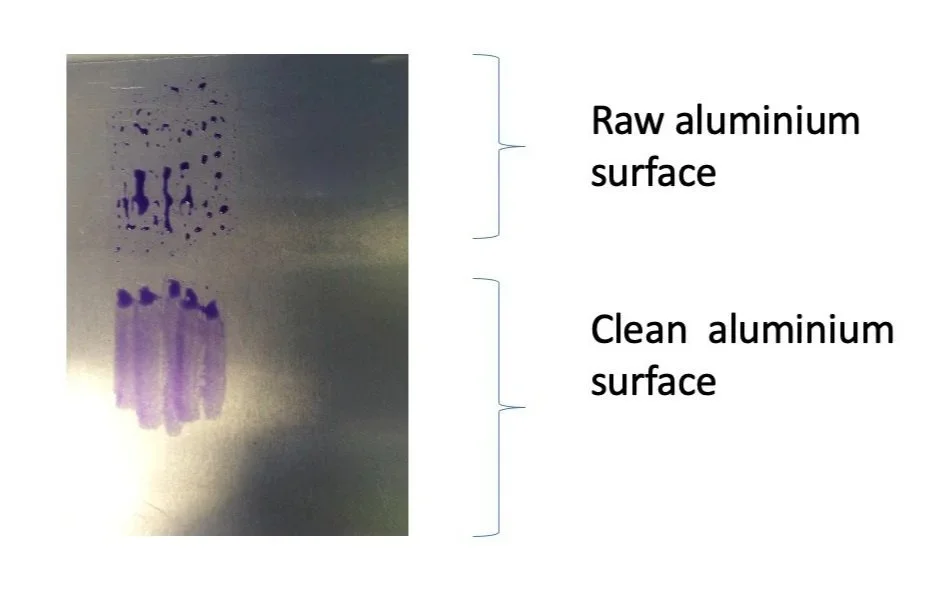
Dyne ink application on an aluminium surface.
Visual inspections of incoming parts - Visual inspection is done to check for any oil contamination and any damage in transit before parts enter the coating process.
And if contamination is suspected, Dyne inks and UV-fluorescence are used to measure the severity of aluminium surface contaminants.
Dyne test fluid is applied to the metal surface. If the liquid forms a continuous film, the surface is sufficiently clean. If it retracts into droplets, contamination is present. Proper surface cleanliness is essential for coating adhesion and long-term coating durability.
Identifying contamination early on prevents coating defects and ensures only suitable parts enter the production process.
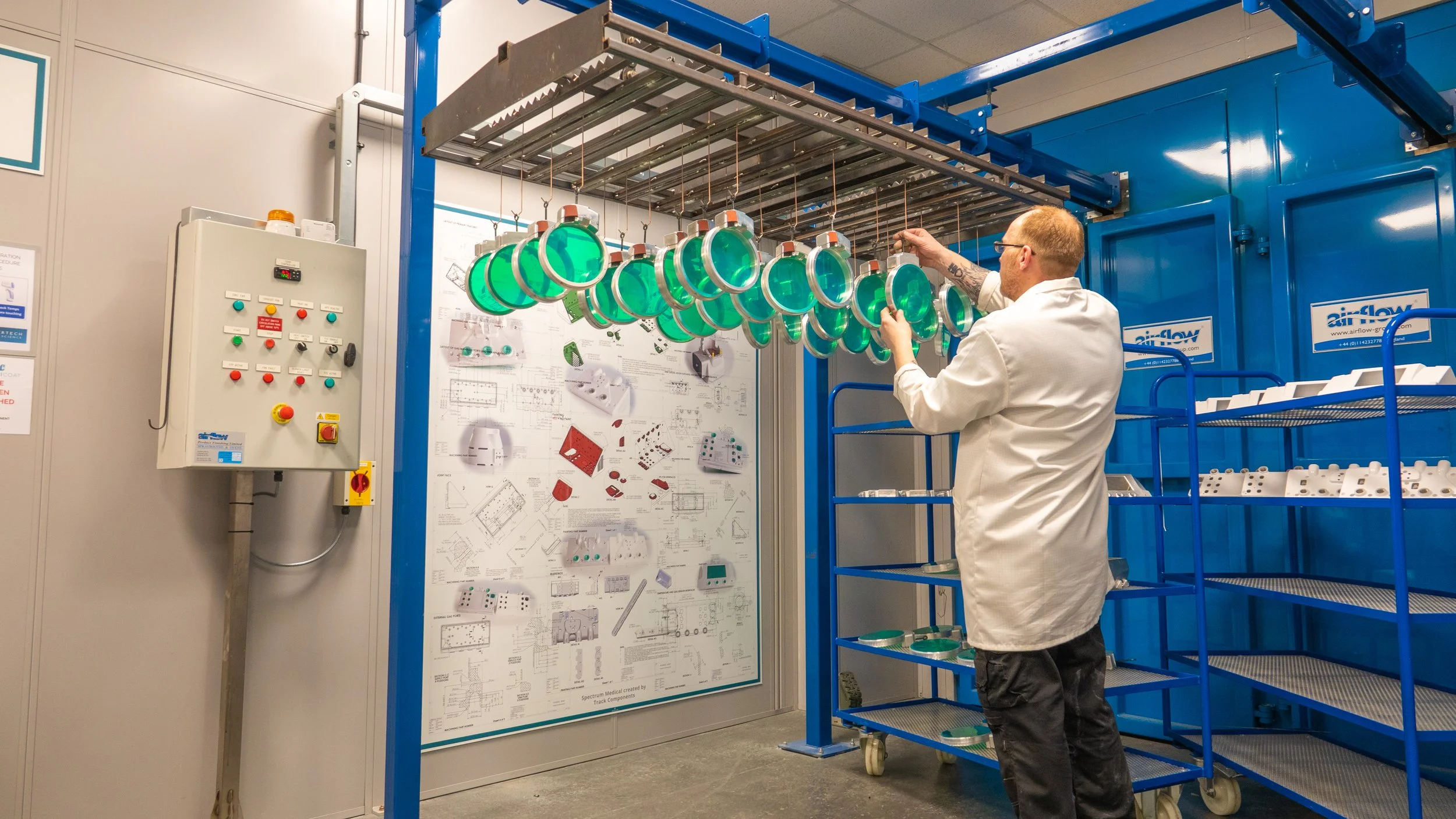
Visual inspection at INTRICOAT
Pre-treatment verification and surface analysis (XRF testing)
Within each batch, individual components are tested to validate the performance of our processes.
Passivation validation, XRF testing - X-ray fluorescence (XRF) analysis measures the elemental composition of the surface. We can use this to verify the presence of a successful pretreatment passivation (TiZr) process.
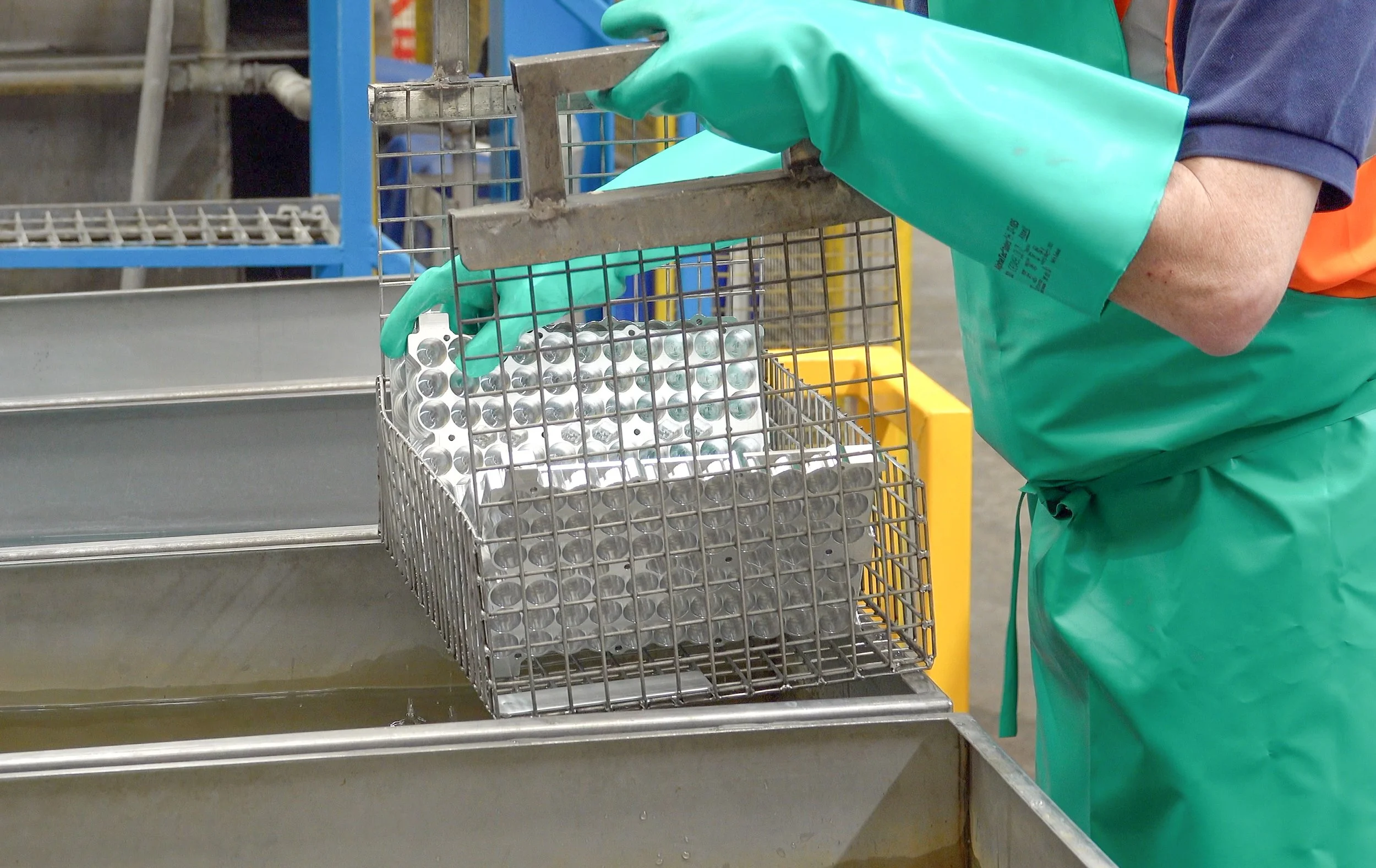
We have XRF (X-ray fluorescence) capability on-site. This handheld device will give us immediate, lab-quality results from which we can determine the next course of action, allowing us to stay on top of our TiZr passivation quality. This is a powerful, non-destructive technique for measuring elemental composition from magnesium (Mg) to uranium (U).
This confirms that the pretreatment process has been correctly applied.
Coating performance and cosmetic quality checks at INTRICOAT
Once coating begins, performance and appearance of the coated parts are monitored to ensure both functional and aesthetic quality standards are achieved. These checks verify that coatings meet required adhesion, finish, and durability expectations before components progress further in production.
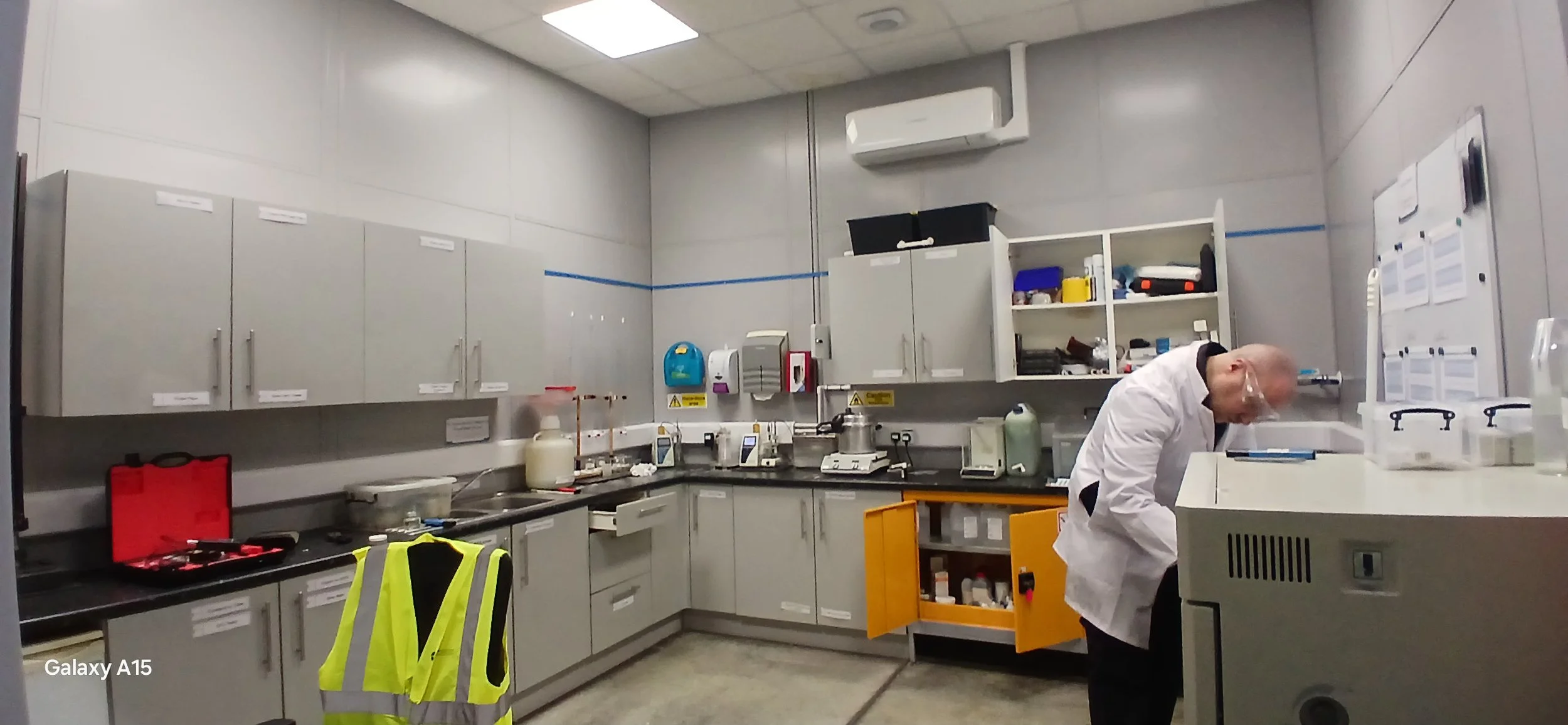
Water break - A process control test used to validate surface cleanliness (TiZr) before coating. Deionised water is applied to the metal surface. If the water forms a continuous cascading film, the surface is clean. If the water breaks into droplets, contamination is present. This test confirms that the surface preparation process has effectively removed oils or residues that could compromise coating adhesion.
Spot test - A passivation validation test used to confirm the presence of pretreatment layers such as Iridite or TiZr, wherein a chemical solution is applied to the treated surface. And the rate and nature of colour change would indicate whether the pretreatment layer is present and effective. Verifying the pretreatment process ensures the coating system will provide the required corrosion resistance and durability.
Cross-hatch test- A type of adhesion testing to validate the process of curing. A grid pattern is cut into the cured coating, and adhesive tape is applied and removed to determine how well the coating adheres to the surface. This test dictates the success of powder application and confirms if curing conditions and application parameters have produced a strong and reliable coating bond.
Our process at INTRICOAT closely aligns with customer expectations and control plans of demanding industries, where precision and process control are critical.
Our process allows the technician to be closer to the parts, ensuring efficiency at each stage. Parts are checked and compared with the drawing provided by the customers before coating begins.
INTRICOAT ensures efficiency is maintained both at lower and higher volumes of production, as the same quality process can be adapted when production is scaled.
Special testing and problem management (subject to a special request from the customer or if problems arise)
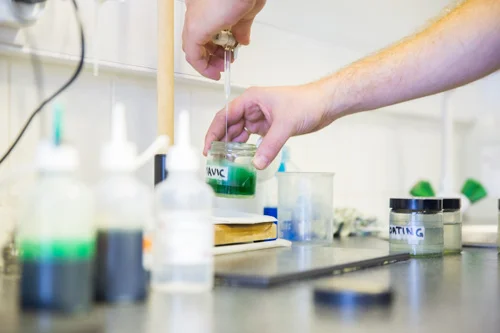
Hardness testing – Through this process, we help the customer to select the right powder for their components. Conducted during the powder selection stage to ensure coatings meet both functional and aesthetic requirements. This is not part of routine batch testing but helps identify the most suitable coating system for real-world performance.
Impact testing - Performed on test tokens as part of powder evaluation rather than batch testing. These tests are typically conducted before coating and are carried out when specified by the customer. In many cases, this validation is supported through our trusted powder coating suppliers.
Corrosion resistance testing (outsourced) – A salt spray testing process is conducted when required by customers to evaluate long-term corrosion performance. This testing is carried out through approved external laboratories.
Why choose INTRICOAT by Powdertech?
INTRICOAT’s structured quality control processes ensure consistent, reliable, and high-performance powder coating at every stage. Through rigorous testing, validation, and inspection, we deliver surface finishes that meet the highest industry and customer standards. For expert powder coating solutions, get in touch with Powdertech.