Wet paint or powder coating, which aluminium surface finish is ideal for your high-quality components?
Key takeaways
Explains the key differences between wet paint and powder coating for aluminium components, including process, performance, application methods and more.
Compares durability, environmental impact, VOC emissions and production efficiency to help select the right surface finish.
Shows why Powdertech Surface Science is a trusted UK partner for high-performance aluminium surface finishing
When choosing the right surface finishing process for metal components, whether for automotive, architectural, medical, or electronics, two options dominate: powder coating and wet paint.
But which one is the best fit for your needs?
Whether you are concerned about durability, environmental impact, or application methods, understanding the key differences between these two finishing techniques is crucial. On the surface, they might seem similar, but in reality, both processes are completely different.
This guide breaks down the key differences between powder coating and wet paint and explains why Powdertech Surface Science has become a trusted partner for high-performance coating projects across the UK.
By the end, you will have a comprehensive understanding, and you can confidently choose the right aluminium surface finish for your components.
Powder coating vs wet paint: A detailed overview
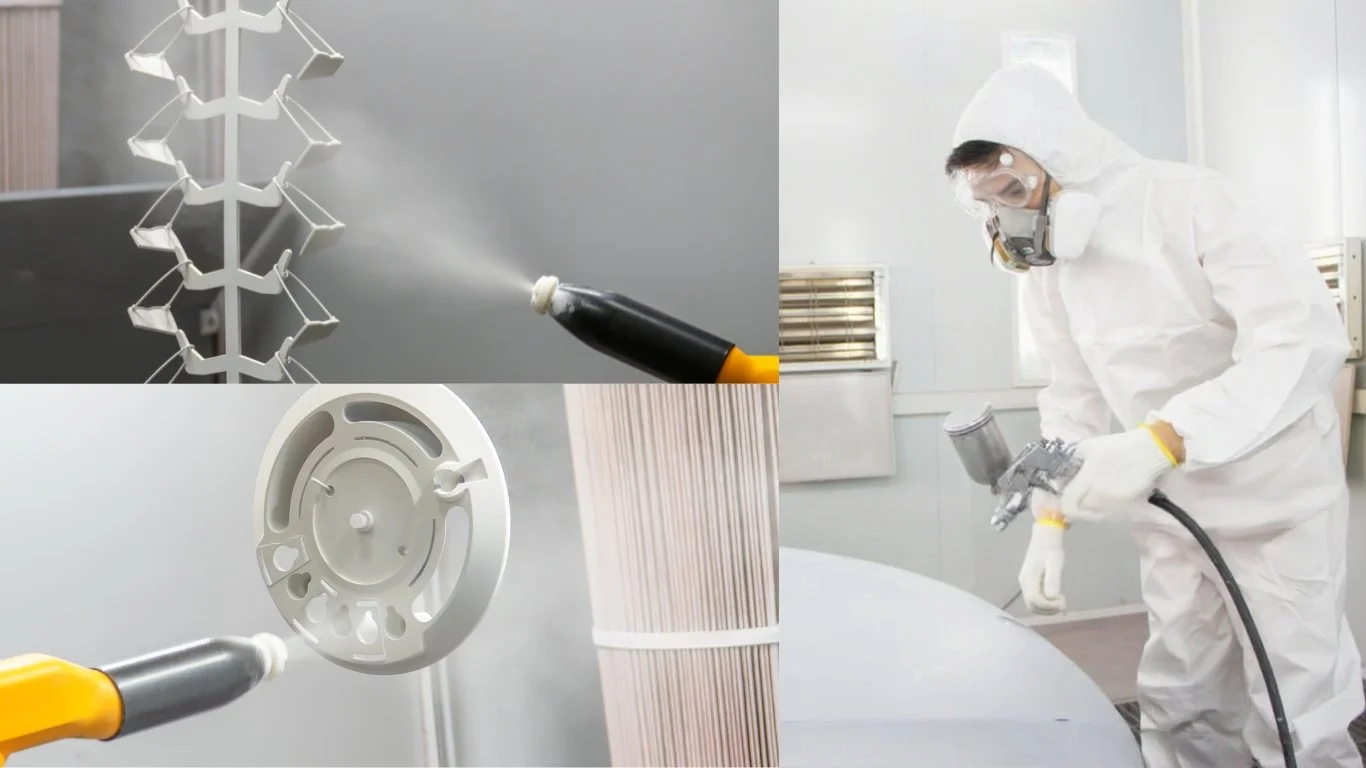
Both wet paint and powder coating enhance the appearance of the metal surface. However, the application process, coating chemistry, environmental impact, protection, and performance vary dramatically.
Wet paints are available in water-based and solvent-based formulations to suit a wide range of substrates via single coat or multi-coat processes, and allow for a wide range of colours. Wet paint is widely used in large structures and temperature-sensitive materials.
Powder coats are supplied in the dry powder form and rely on curing at high temperatures to flow and produce highly cosmetic, durable finishes. Powder coat formulations have the ability to produce a wide variety of colours and gloss levels within a single application.
Based on what your components require in terms of functionality, appearance, safety, sustainability, and cost efficiency, you can decide to choose wet paint or powder coating.
Wet paint; A traditional coating system
✔ Controlled spray environment needed
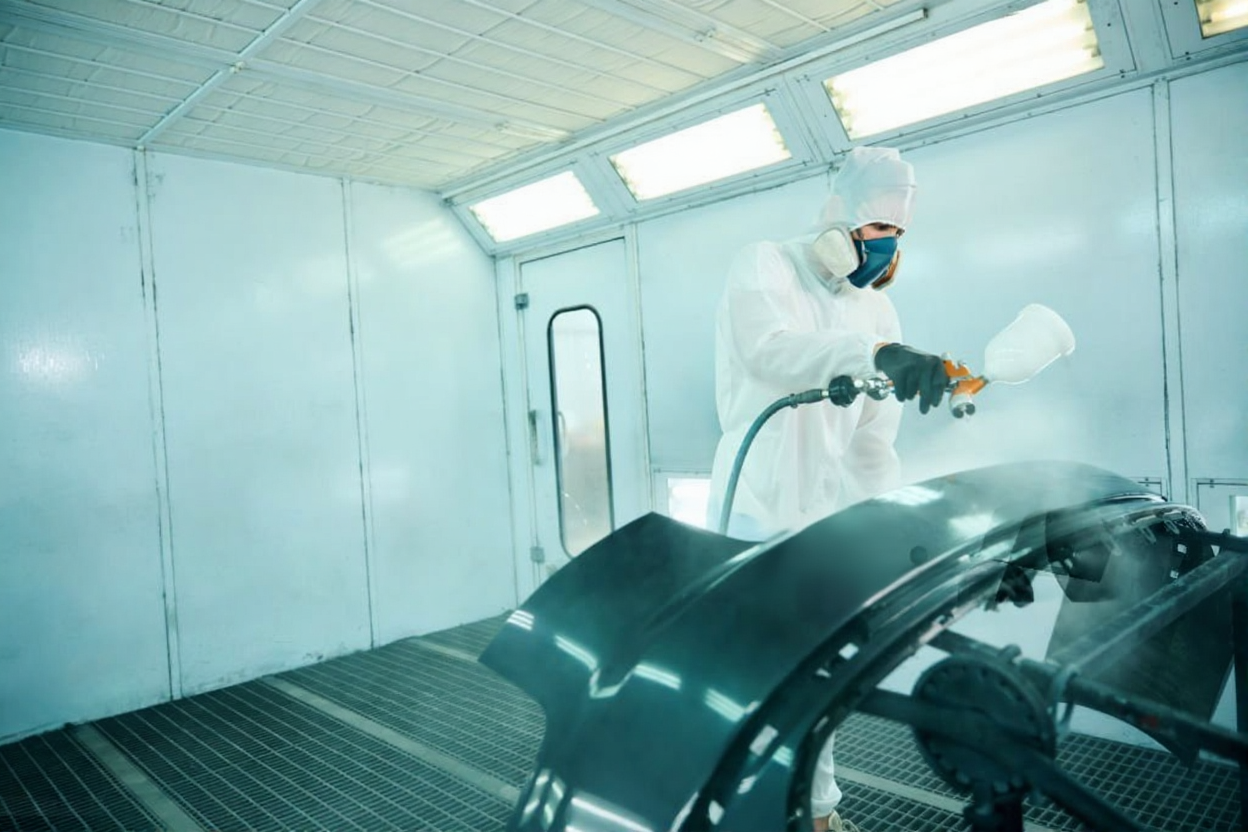
Wet paint process
Wet paints are sensitive to changes in viscosity and thus need greater control over solvents (Thinners) and application temperature. Humidity, temperature, ventilation, and drying conditions all impact the finish.
These solvents evaporate during the drying process, and the evaporation of solvents releases VOCs into the atmosphere, contributing to environmental pollution and health concerns
With wet paints, there is a need to protect the operator and the environment from the VOC given off during the application stage. Without such controls, these VOCs would have a significant negative effect on the operator's health and the environment.
✔ Multiple coats required to achieve the desired surface finish
Wet paint overspray cannot be reused and leads to reduced transfer efficiency and degradation of the application booth, which requires strong preventative maintenance schedules to maintain the area. The process of mixing paints with solvents and hardeners introduces rigid ‘pot lives’ that require careful management.
✔ Hazardous solvents & VOCs emissions
Wet paint contains harmful solvents (carcinogenic), and the hardeners can contain isocyanates (can create respiratory issues). Therefore, sprayers are required to wear respiratory and full-body protective equipment.
The area of application needs to be carefully designed and controlled to prevent VOCs from reaching the environment, and such facilities will be governed by local legislation.
In addition, waste paint, solvents, and contaminated materials are classified as hazardous and require utmost care with disposal.
✔ Processing timing
Wet paint typically achieves a durability after cure to support additional processing, but does not reach its full potential until several days later, thus requiring components to be kept in a controlled environment.
Powder coating: A modern, cleaner, and more durable alternative
The powder is paint in dry powder form, made of resins, binders, and pigments. It picks up an electrostatic charge as it leaves the end of a spray gun and becomes attracted to the metal substrate.
The coating is then cured by heat to form a smooth, hard skin of uniform thickness on the surface of the metal. This is a very different process from wet paint spraying, with time saving and control over process variables being big advantages.
Powder coating is generally a one-coat system, and after application, the coat can be cured in 20 minutes, whatever the weather.
✔ Easily automated, an ideal choice for demanding industries.
Powder coating can be easily automated, resulting in faster turnaround times, and is ideal for industries where performance and durability matter, ideal for automotive, medical, aerospace, and high-volume industrial sectors.
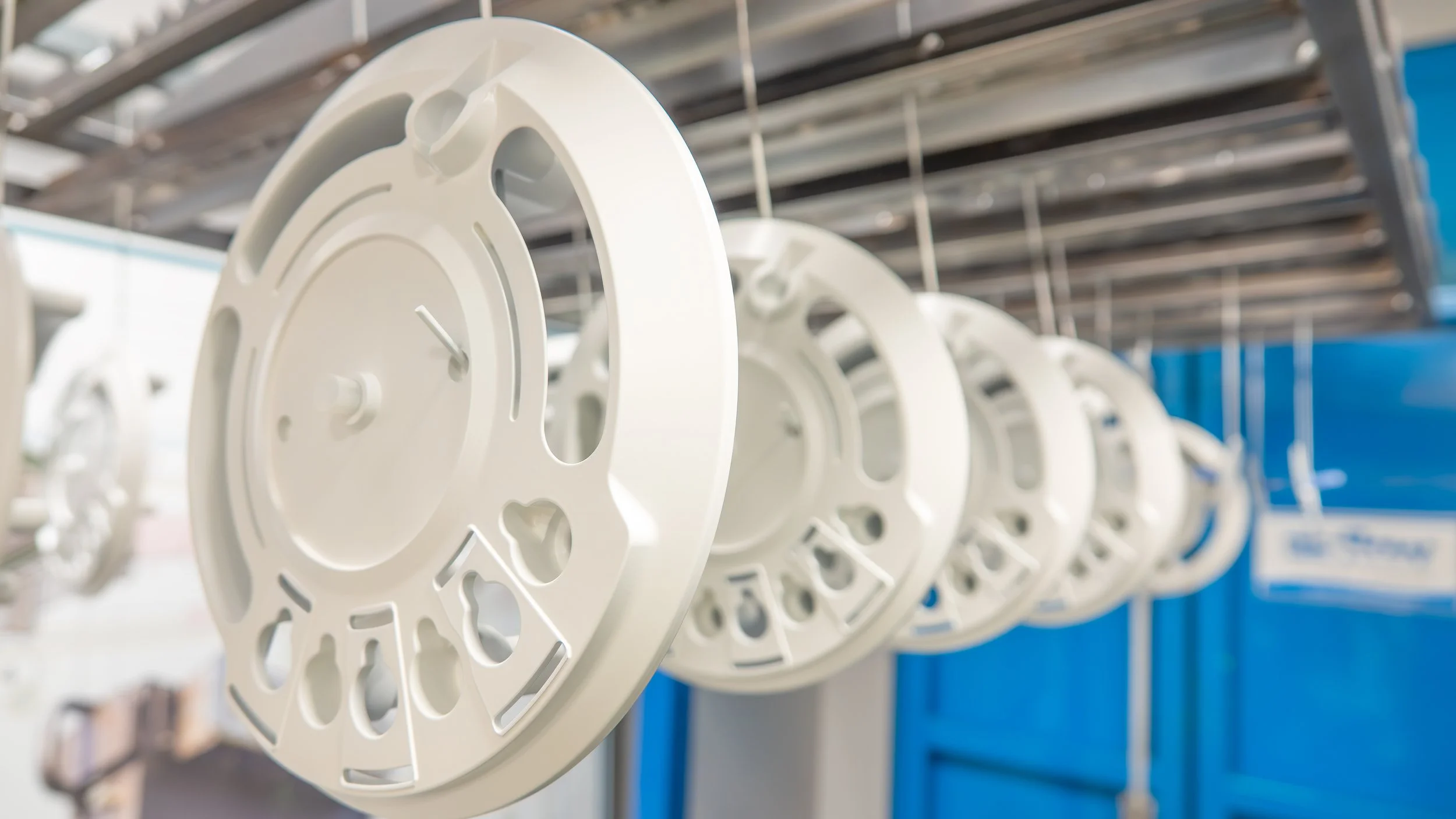
Quality surface finish
✔ Uniform & durable weather-resistant surface coating finish
Powder coating provides a wide range of single-coat finishes suitable for harsh environments. High-temperature curing creates a uniform bond across the surfaces of the component, and when coupled with the correct pre-treatment process, powder coats have the ability to produce highly durable finishes suitable for exposure to hostile environments.
Powder coats reach their full potential within minutes of curing allow rapid transfer of parts to assembly processes or exposure to the environment.
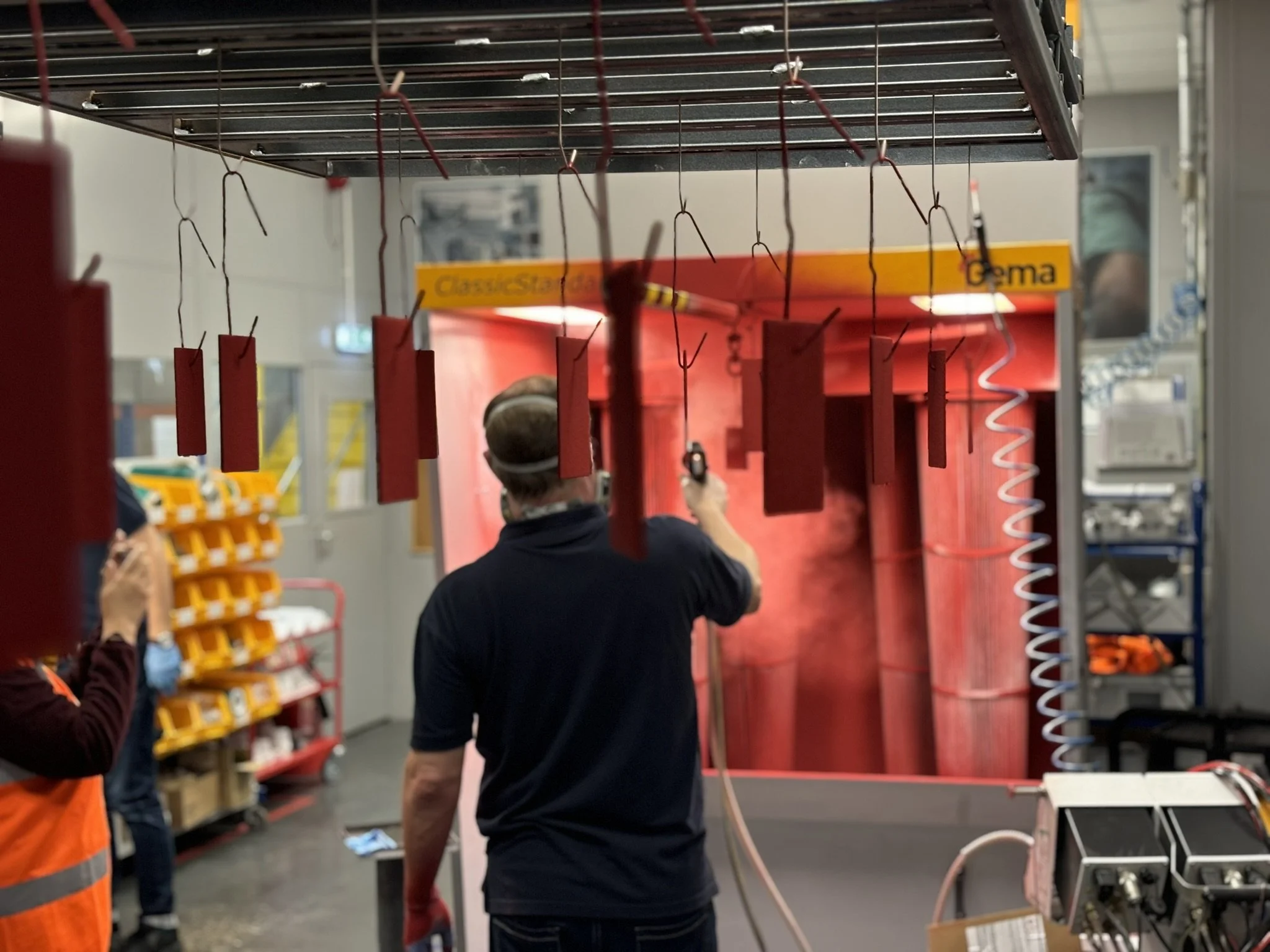
Powder coating process
✔ Flexible and easy to work with
Typically, powder coats require a controlled environment to protect the process from the environment. Very little powder is lost from the system as overspray is captured and recycled back into the application process.
✔ Zero or negligible VOC emissions
Powder coatings are a dry powder and emit zero or negligible volatile organic compounds (VOCs). Being dry, powder coatings have no solvents containing volatile compounds. Powder coatings contain no halogens or heavy metals.
✔ Eco-friendly, cleaner workspace & recyclable
Powder coatings do not produce hazardous waste. The process takes place in sealed booths, and 95% of what is sprayed adheres to the metal or is collected, filtered, and reused. Any powder left over is safely disposed of as an inert powder.
Powder coating takes place in factory-controlled conditions, so there is no on-site impact. Powder coating does not mean ‘end-of-life’ status for the metal; the coating can be removed and the metal recycled with no adverse effect.
What makes Powdertech a trusted partner in the UK for high-performance coating projects?
“They demonstrated a clear understanding of our requirements from the outset, swiftly allocating resources where needed. From RFQ through to bulk order processing, their support was consistent, reliable, and highly professional”

6-axis Lesta robot
Exceptionally high standards of service
We use high-performance powders and the latest automatic powder coating spray equipment to ensure a consistent finish. We regularly invest in new equipment and facilities. Your metal will be pre-treated and coated to an exceptionally high standard, and we go beyond that - our expertise extends to developing new pre-treatments and powder coatings for unique applications.
2. Prototype to full production, all under one roof
You can send us low-volume, fast turnaround prototype parts as well as tightly controlled production components. Our facility can process small, fragile aluminium and magnesium components, as well as accommodate sections up to 4 metres long. Automated horizontal powder coating line for parts up to 4m in length. Automated vertical powder coating line for smaller components of up to 1.2m in length
6-axis Lesta robot for refining inaccessible areas, replacing manual touch-up. We have a pilot line facility for development work, prototype testing, and scale-up validated to two automated production lines.
3. Chrome-free metal pre-treatment processes
TiZr coating, a form of conversion coating, offers a stable base for powder coating and offers additional protection against corrosion. And Iridite NCP, a corrosion resistant aluminium metal finishing, that meets ELV, RoHS and WEEE standards and qualified under MIL – DTL – 5541 TYPE II CLASS 3 and MIL – DTL – 81706.
4. Investment in advanced equipment, laboratories for bond strength testing, metal surface composition testing, and quality control
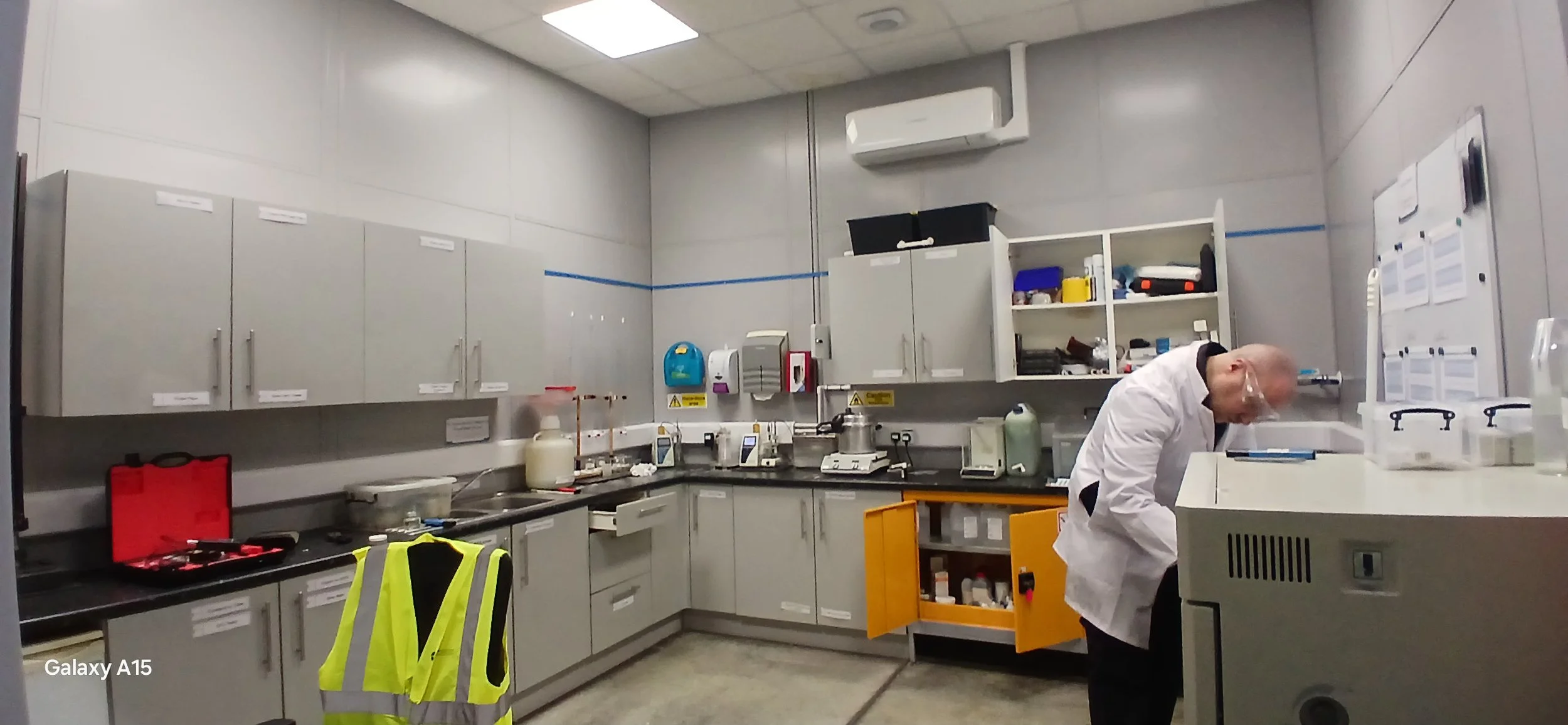
Quality control lab at Powdertech
We have two dedicated surface coating laboratories, a Surface Characterisation Laboratory (dry lab) and a Quality Control Laboratory (wet lab). These work in conjunction in order for us to test:-
Bond strength following the TiZr passivation process
High potential testing, used for dielectric coatings